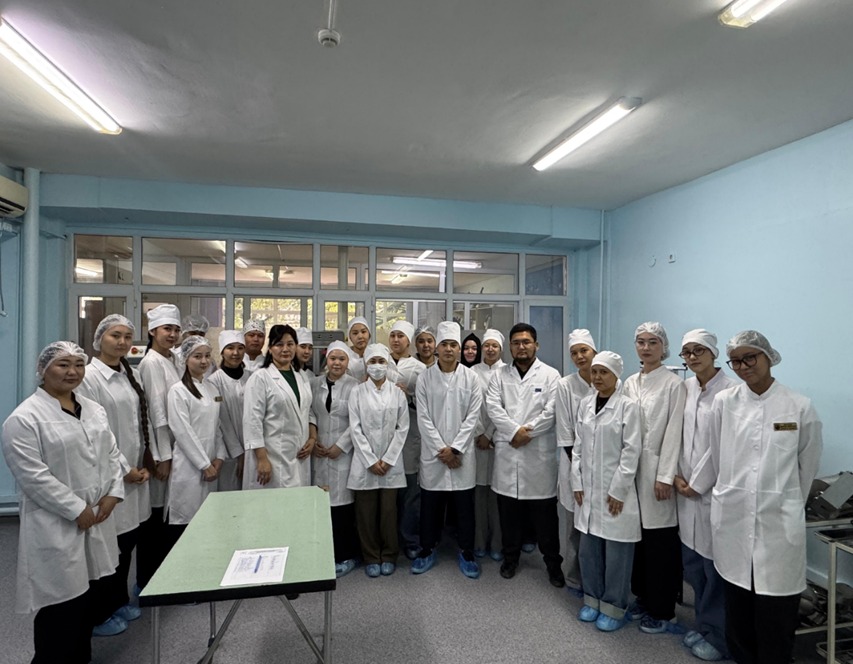
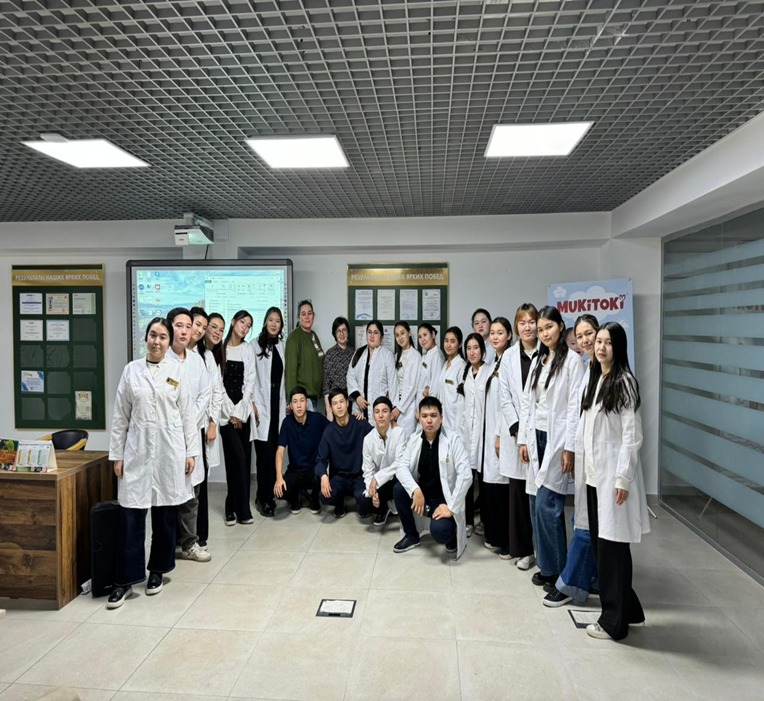
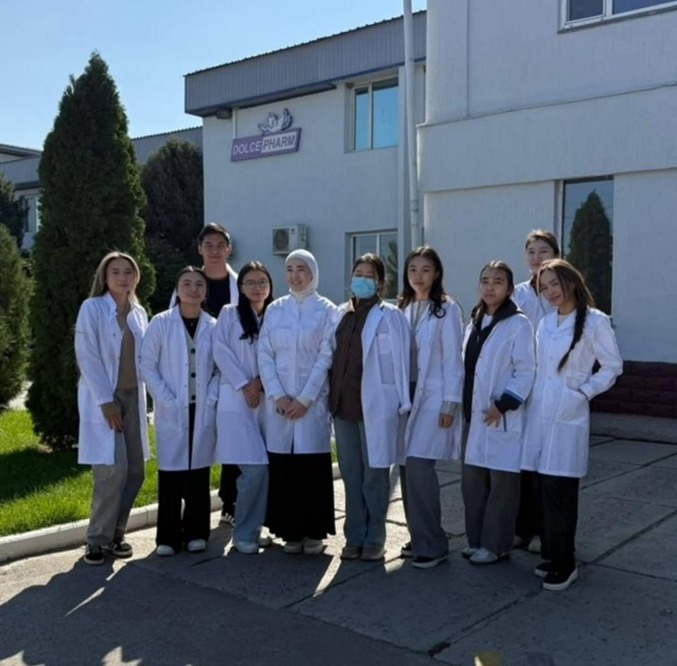
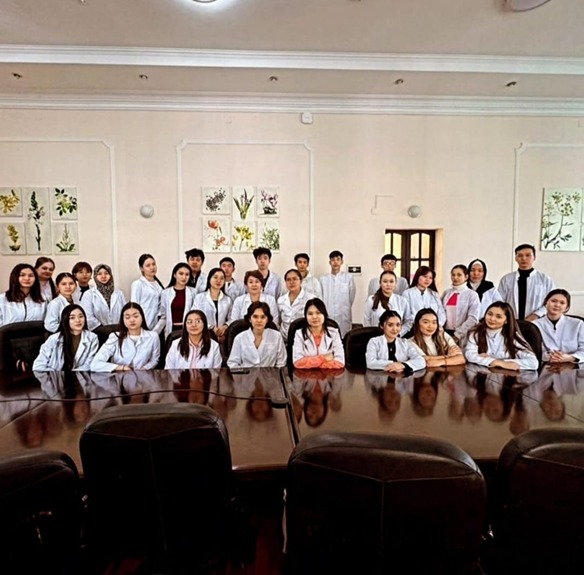
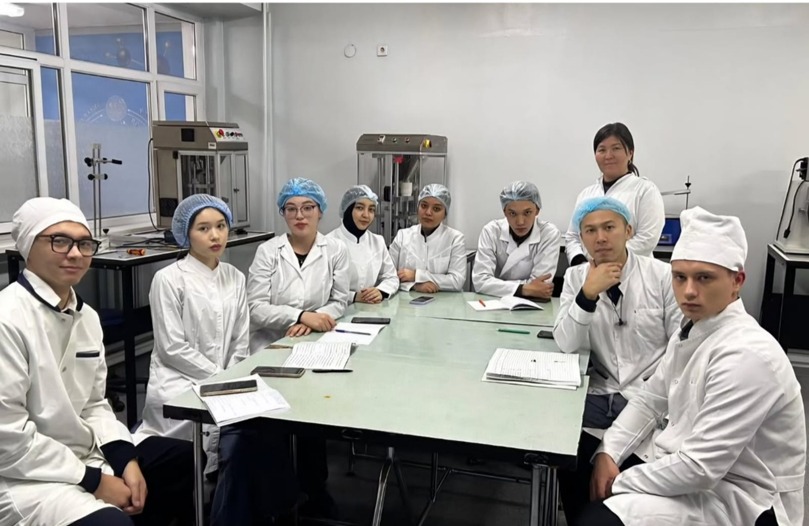
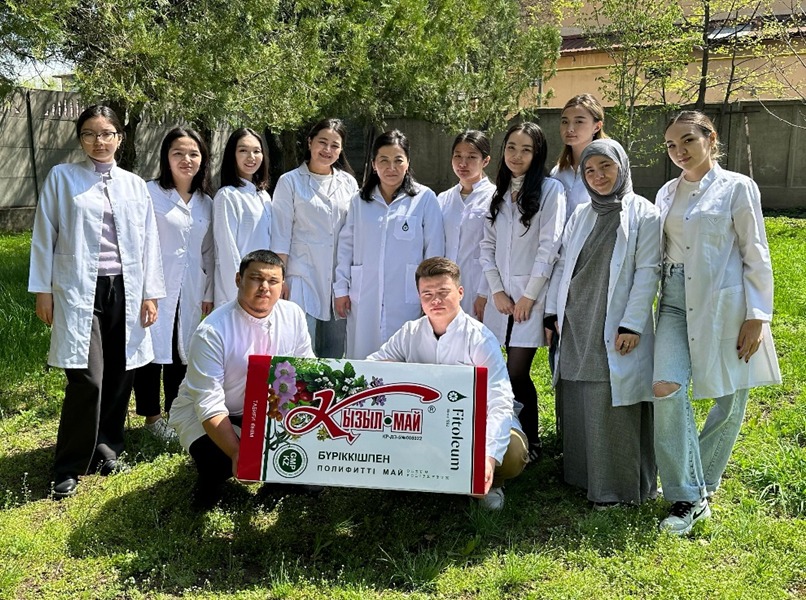
Under the educational program B072 – “Pharmaceutical Manufacturing Technology,” 2nd-, 3rd-, and 4th-year students undergo academic, industrial, and pre-graduation internships in accordance with the curriculum.
The main purpose of these internships is to consolidate theoretical knowledge, develop professional skills, and gain practical experience in the field of pharmaceutical manufacturing. The content of the internships becomes progressively more complex at each academic level, aiming to enhance the professional competencies of future specialists.
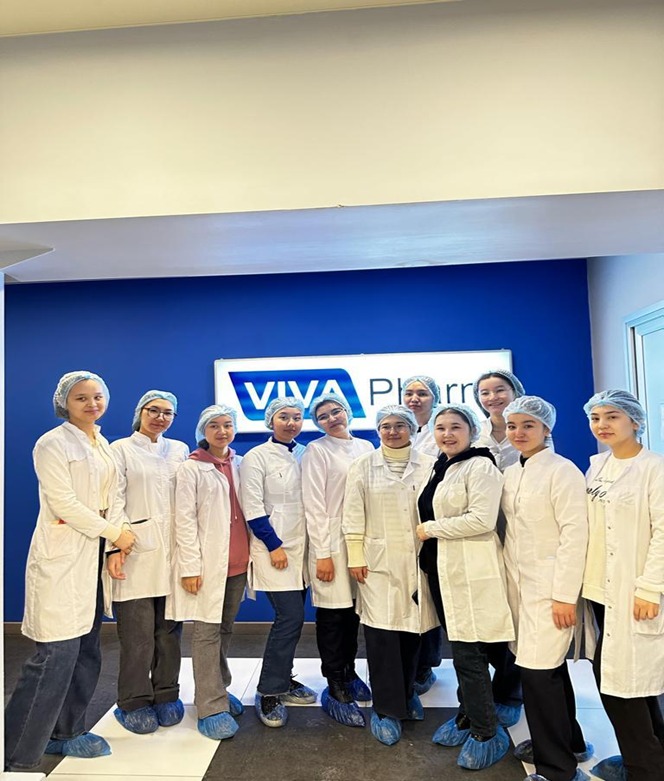
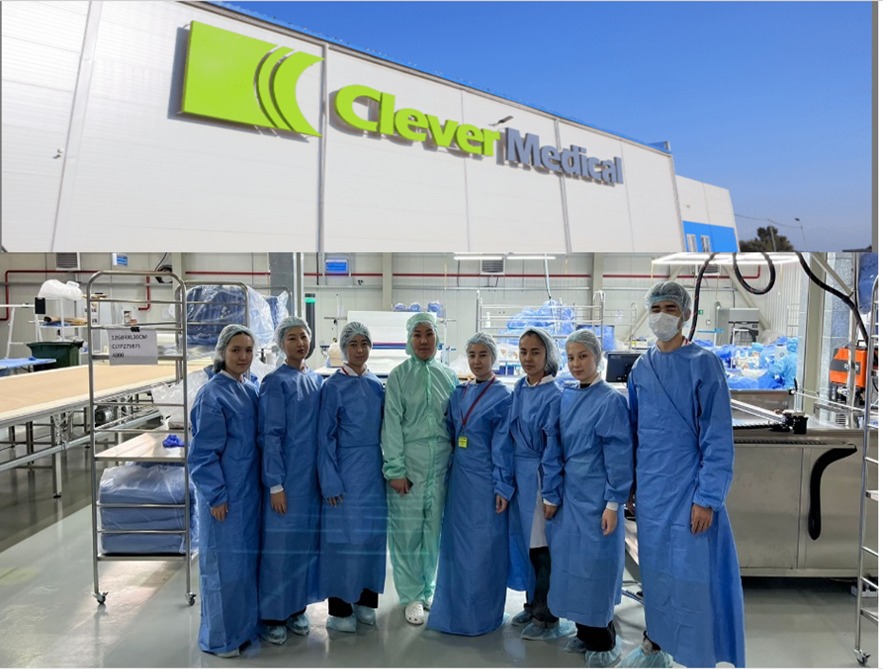
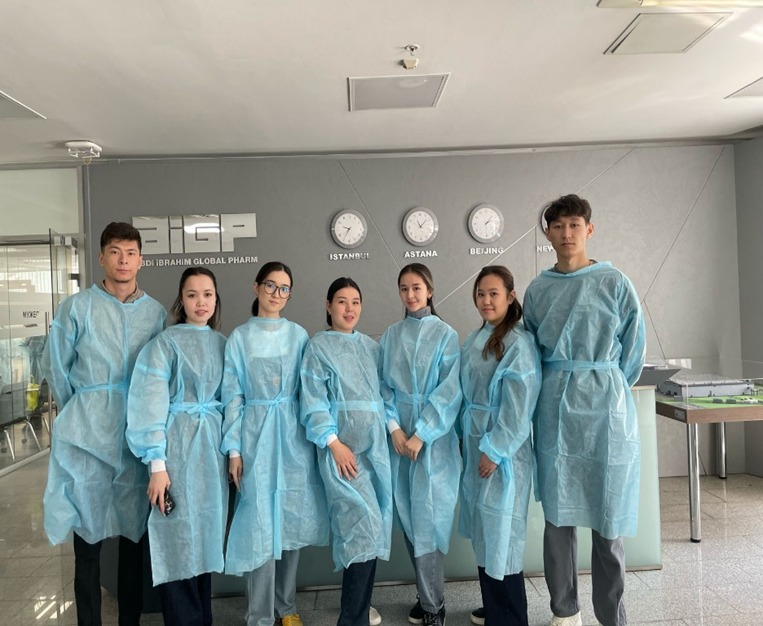
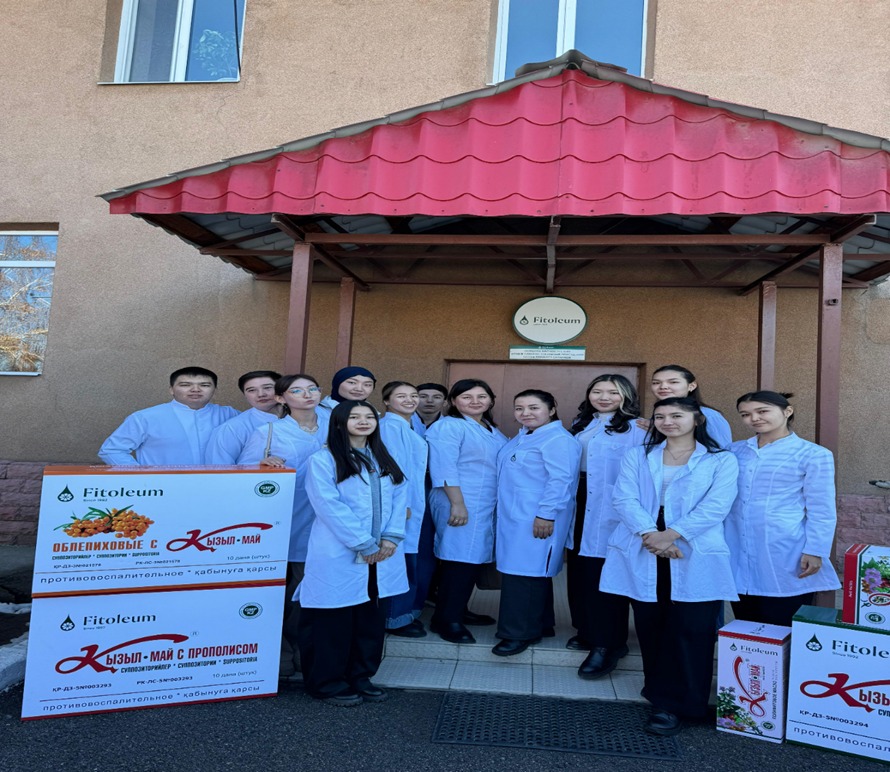
During the internship, students become acquainted with production processes at leading domestic pharmaceutical enterprises, including LLP “Abdi Ibrahim Global Farm,” LLP “Viva Pharm,” LLP “Clever Medical,” LLP “Nur-Mai,” LLP “Fitoleum,” LLP “Dolce-Pharm,” LLP “Antigen,” and LLP “Kelun-Kazpharm.” These enterprises operate in accordance with modern GMP standards and provide valuable opportunities for developing students’ professional experience.
In the 2025–2026 academic year:
- For 2nd-year students, the academic internship “Introduction to the Production of Medicinal Products” is conducted from September 29 to December 15, 2025, comprising 2 credits (60 hours). A total of 127 students participate;
- The 3rd-year industrial internship in “Industrial Technology of Medicines” is held from September 22 to November 22, 2025, comprising 3 credits (90 hours). A total of 202 students participate;
- The 4th-year industrial internship in “Industrial Technology of Pharmaceutical Products” is conducted from September 22 to December 12, 2025, comprising 2 credits (60 hours). A total of 257 students take part.
Upon completion of the industrial internship, students of the “Pharmaceutical Manufacturing Technology” program acquire the following professional competencies:
Understanding the structure and operational principles of a pharmaceutical enterprise
- develop a clear understanding of the functions of primary and auxiliary production units, as well as their interconnection and role in the manufacturing process;
- are able to evaluate the functions of production departments, technological flows, and the organization of production processes.
Mastery of key processes and equipment used in pharmaceutical manufacturing
- understand main technological stages such as raw material preparation, milling, mixing, granulation, filtration, filling, and packaging;
- know the operational principles of equipment (reactors, blow-molding machines, mixers, tablet presses, encapsulators, autoclaves, filtration systems, etc.);
- acquire basic skills in safe equipment operation and technical requirements.
Ability to apply technological instructions (TI, SOPs)
- are able to work with technological regulations, Standard Operating Procedures (SOPs), production instructions, and quality documentation;
- understand the importance of following technological stages in accordance with documentation;
- recognize the role of documentation accuracy and compliance with GMP requirements in the production process.